
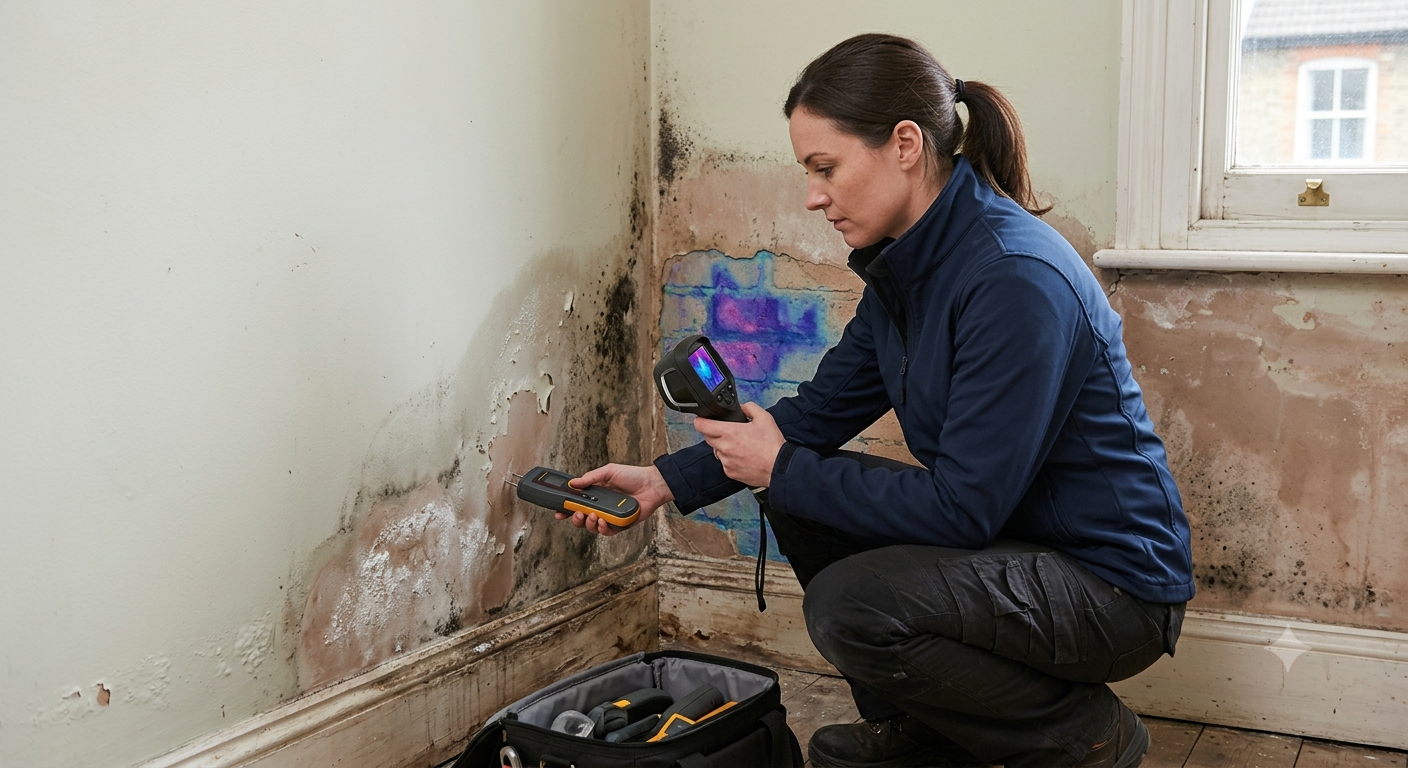
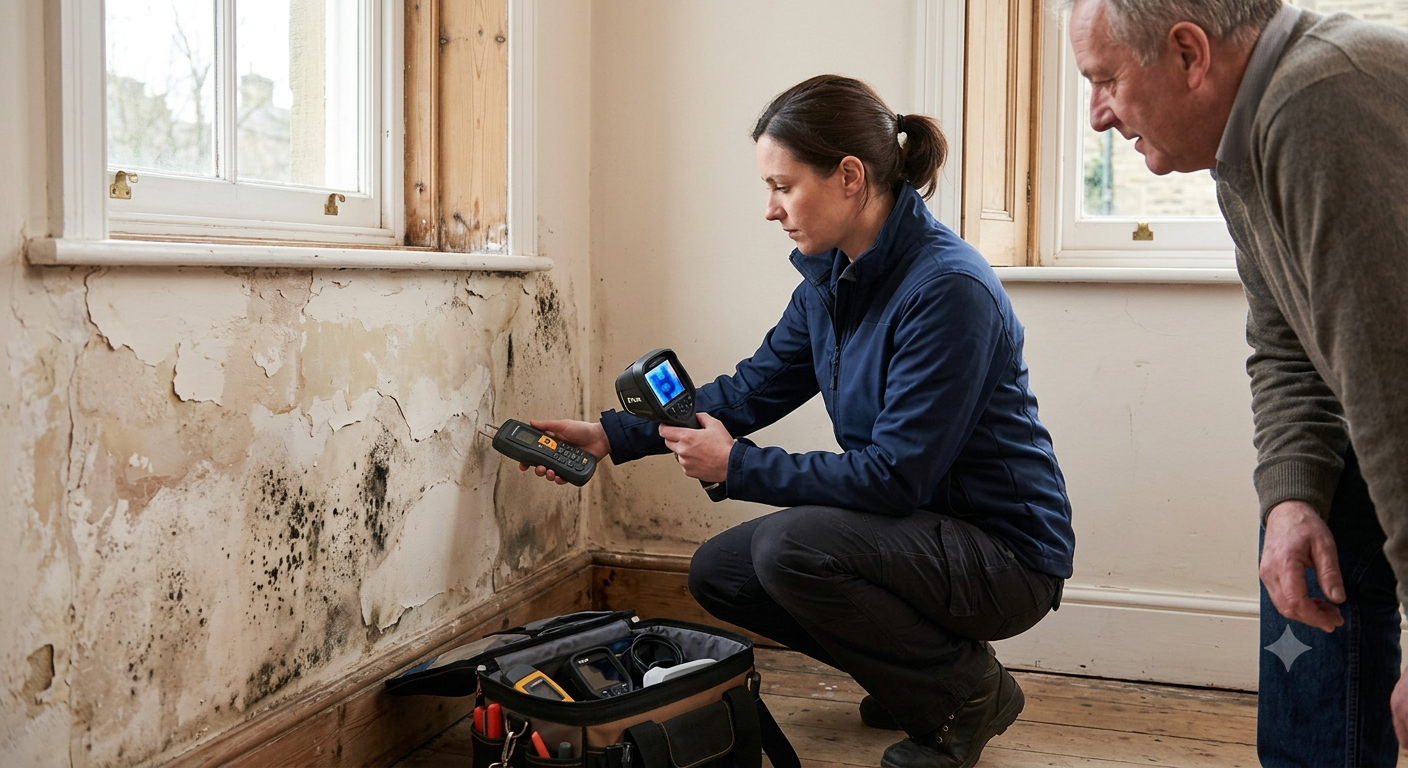
Whether you live in a characterful stone cottage in Harrogate, a Victorian terrace in Leeds, or a family home in Wakefield, dampness and black mould are constant battles for Yorkshire property owners.
Many homeowners try quick fixes—wiping down walls with bleach, applying damp-seal paint, or leaving windows cracked on cold winter days. Yet, within weeks, the black spots reappear, wallpaper peels, and the persistent musty smell returns.
The problem isn’t your cleaning routine; it’s that the root cause of moisture inside your property remains untreated.
3 Main Types of Damp Affecting Yorkshire Properties
To stop damp permanently, you first need to identify where the moisture is coming from.
1. Condensation & Black Mould (The #1 Winter Threat)
Modern energy-saving measures like UPVC windows and cavity wall insulation seal warmth inside—but they also trap humidity created by cooking, showering, and drying clothes indoors. When warm humid air hits cold, uninsulated external walls, water droplets form.
-
The Signs: Black mould spots around window frames and external wall corners, streaming glass in the morning, and musty odors in bedrooms or lofts.
-
The Solution: Installing Positive Input Ventilation (PIV) systems. PIV units gently introduce fresh, filtered air into your home, forcing stale, moisture-laden air out and eliminating condensation for good.
2. Rising Damp
Occurring primarily on ground-floor walls, rising damp happens when groundwater travels upward through porous brickwork and mortar via capillary action.
-
The Signs: Tidemarks extending up to 1 metre high, salty white deposits bubbling through paintwork, crumbling plaster, and decaying skirting boards.
-
The Solution: Injecting a high-performance Damp Proof Course (DPC) into the masonry to create an impenetrable barrier against ground water, followed by salt-retardant replastering.
3. Penetrating Damp & Timber Rot
When rainwater enters through external building defects—such as cracked render, defective mortar pointing, or damaged gutters—it soaks through brickwork into internal walls.
-
The Signs: Spreading damp patches on walls or ceilings, wet rot, dry rot, and degraded timber structures.
-
The Solution: Repairing external masonry defects paired with specialist internal timber and structural treatments.
Buying a Property? Don’t Skip a Pre-Purchase Survey
If a HomeBuyer survey or mortgage lender has flagged potential dampness, don’t walk away or panic. Arranging a Pre-Purchase Property Damp Survey before exchanging contracts ensures:
-
Clear Cost Transparency: You’ll know exactly what repairs are required before you complete the purchase.
-
Price Negotiation Leverage: Evidence to renegotiate the purchase price if genuine structural work is needed.
-
Long-Term Protection: Guaranteeing you don’t inherit hidden dry rot or severe damp problems.
Why Choose Yorkshire Damp Experts?
With over 15 years of hands-on local experience, our team brings trusted expertise across West Yorkshire, North Yorkshire, and South Yorkshire:
-
Full Service Capability: From rising damp courses and PIV installations to plastering, timber decay, and mould eradication.
-
Comprehensive Local Coverage: Covering Leeds, Bradford, Harrogate, York, Wakefield, Huddersfield, Sheffield, and surrounding areas.
-
No-Obligation Damp Surveys: Professional inspections backed by honest recommendations and competitive price-match guarantees.
Protect Your Property Today
Stop wiping away mould and masking damp issues. Contact our friendly team to arrange a professional damp survey or get expert advice for your property.
-
Call direct: 0113 320 5150 | 07903 373156
-
Book Online: yorkshiredampservices.co.uk