
Whether you live in a coastal property in Scarborough or Bridlington, an older period home in Harrogate, or a modern town house in Hull, dealing with indoor moisture can be frustrating.
Two of the most common issues Yorkshire homeowners face are rising damp and condensation. While they might look similar at first glance, they stem from completely different causes and require vastly different treatments. Treating condensation as rising damp—or vice versa—will waste time and money without solving the root problem.
Here is how to tell the difference between rising damp and condensation, and what to do if you spot either in your property.
1. What is Rising Damp?
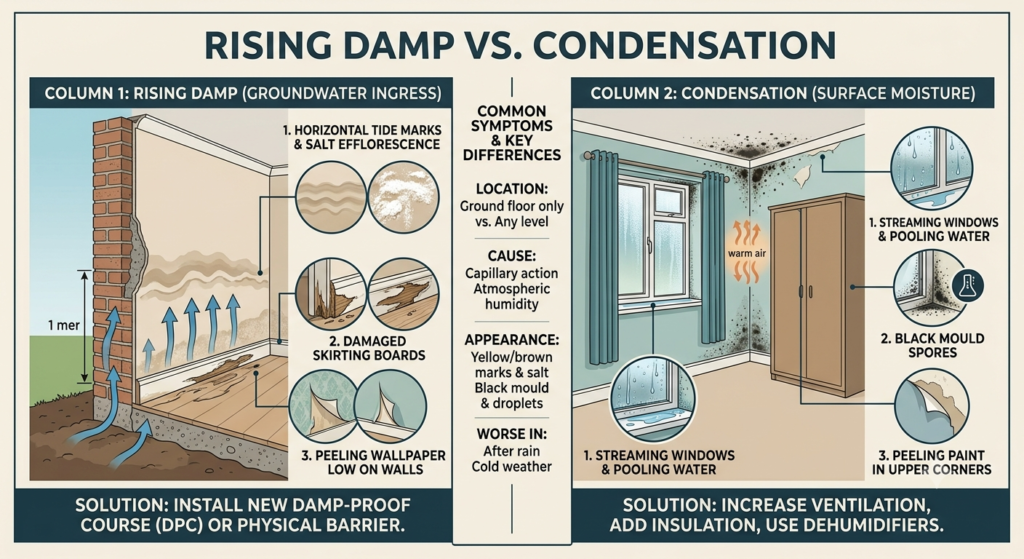
Rising damp occurs when moisture from the ground is drawn up through the porous masonry of a building’s walls via capillary action. Ground salts (such as nitrates and chlorides) rise alongside the water and settle on the plaster.
Key Signs of Rising Damp:
-
Height Limit: Damage usually stops around 1 metre above floor level.
-
Tide Marks: Clear, horizontal wave-like salt stains on internal walls.
-
Damaged Skirting Boards: Softened, decaying, or rotting wood along the floor level.
-
Powdery Residue: White, fluffy salt crystals forming on the plaster or wallpaper.
The Solution:
Rising damp requires a chemical Damp Proof Course (DPC) injection or physical damp barrier to prevent groundwater from rising through brickwork.
2. What is Condensation?
Condensation is the most common form of dampness in UK homes. It occurs when warm, humid air produced by everyday activities (cooking, showering, drying clothes) comes into contact with cold surfaces like glass or uninsulated walls.
Key Signs of Condensation:
-
Water Drops: Beads of water on window panes, mirrors, or tiled walls.
-
Black Mould: Speckled black mould growth (Stachybotrys chartarum) on window seals, ceilings, behind wardrobes, or cold external wall corners.
-
Widespread Location: Can appear on any level of the property, including upper floors and ceilings.
-
Musty Air: A heavy, humid smell throughout living areas.
The Solution:
Managing indoor humidity levels by improving property airflow, installing specialized extractor fans, or fitting Positive Input Ventilation (PIV) systems.
Comparison Summary Table
| Feature | Rising Damp | Condensation |
| Primary Cause | Groundwater moving up through walls | Excess indoor air moisture landing on cold walls |
| Typical Location | Ground floor only (up to 1m high) | Windows, ceilings, corners, upper floors |
| Visual Evidence | Salt tidemarks, peeling wallpaper at floor level | Black mould clusters, streaming windows |
| Seasonality | Present year-round, worse after rain | Worse during autumn & winter months |
Get an Accurate Diagnosis from Local Specialists
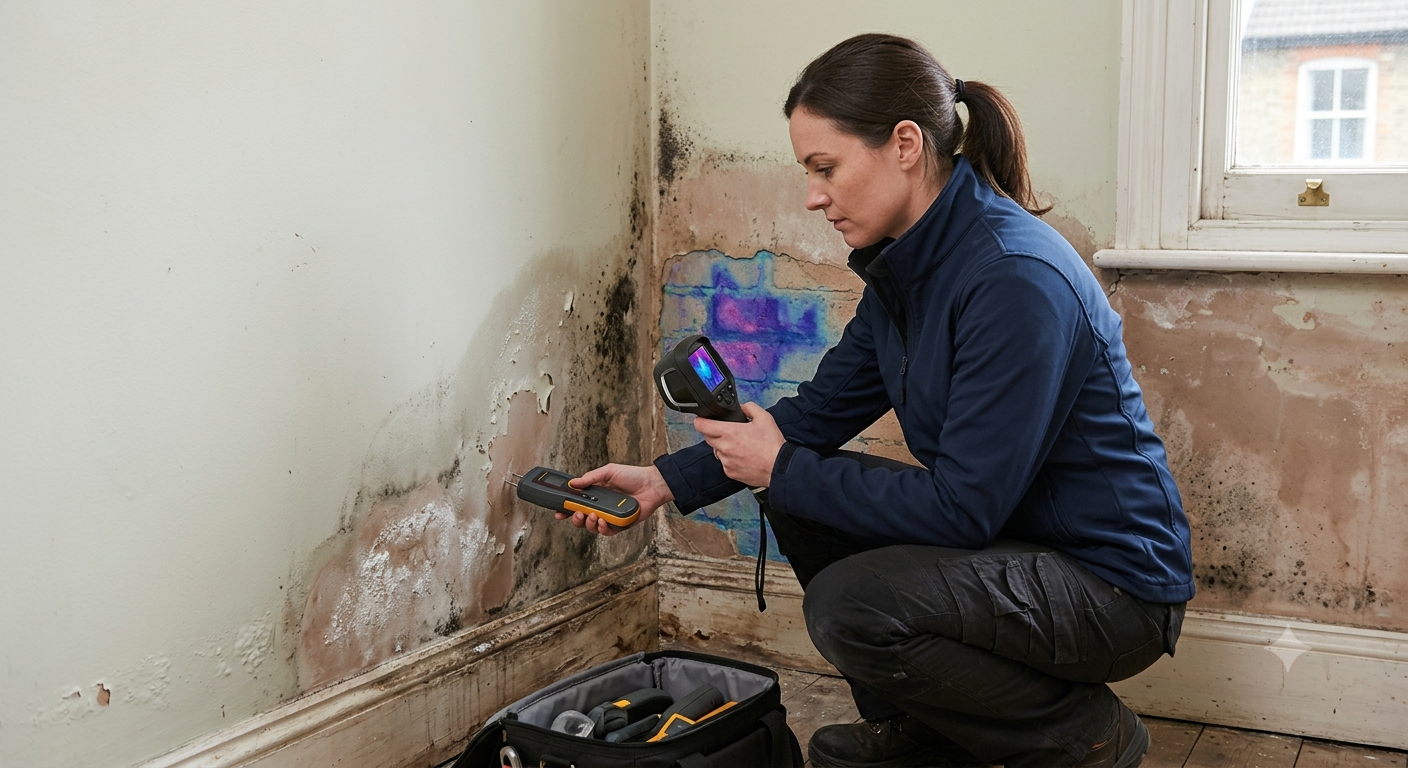
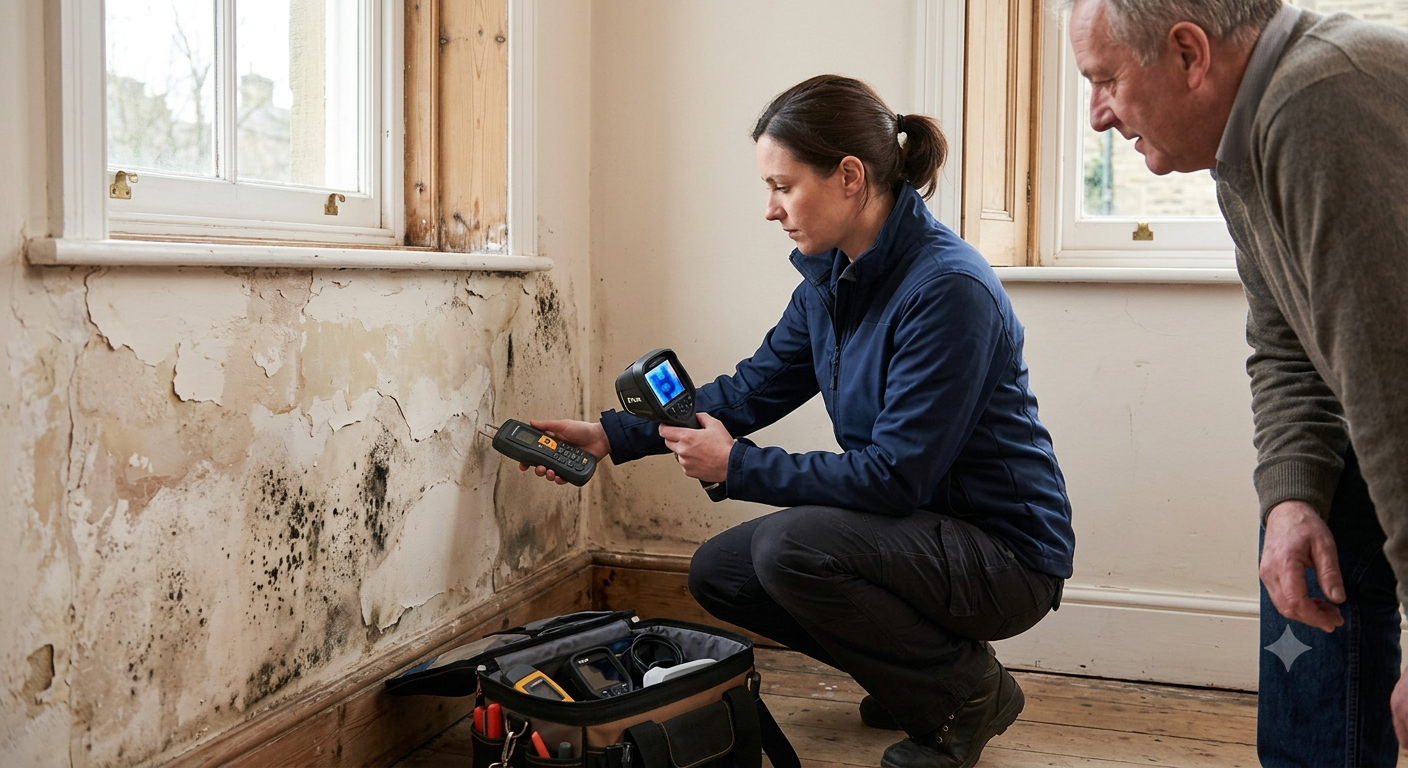
Misdiagnosing damp leads to ineffective treatments and unnecessary costs. If you aren’t sure whether you’re dealing with rising damp or condensation, a professional damp survey will pinpoint the exact source of moisture.
With over 18 years of experience across North & East Yorkshire, Yorkshire Damp Solutions offers complete property preservation services—from damp proofing barriers to professional mould control.
📞 Call for Advice: 01377 3772873
🌐 Request a Free Estimate: Yorkshire Damp Solutions